
Complete Point Coverage
Assign one independent fluorescence probe and one channel to every selected temperature point.
 info@innofj.comContact Engineering
MULTI-CHANNEL POINT TEMPERATURE MONITORING
INNO coordinates 1–64 independent fluorescence fiber optic probes through a configurable multi-channel transmitter or monitoring host. Each channel connects to one probe, and only the sensing tip measures its selected temperature point.
One ProbePer Channel 1–64Independent Channels
 PassiveOptical Sensing
 CentralizedMonitoring Output
Bring several independently selected temperature points into one clear monitoring workflow.
Assign one independent fluorescence probe and one channel to every selected temperature point.

Centralized alarm logic helps operators identify abnormal temperature changes without checking points individually.

Configure the monitoring platform around the required number of independent points, from 1 to 64 channels.
Bring temperatures, alarms and communication outputs together in one monitoring workflow.
POINT-BY-POINT TEMPERATURE MEASUREMENT
Multi-point fiber optic temperature monitoring uses multiple independent temperature probes to measure several locations simultaneously. Each probe is connected to an individual channel of a multi-channel instrument, providing a separate temperature reading for each measurement point.
The number of channels, probe type and fiber length can be configured according to the application. This makes it suitable for applications that require direct temperature measurement at multiple defined locations, with centralized display, alarms, data acquisition and communication.
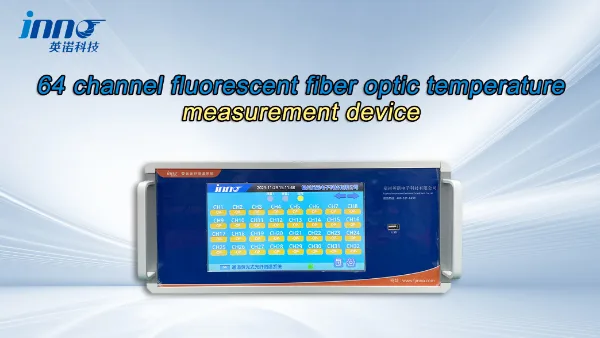

Install one fiber optic temperature probe at each selected measurement point.
→Each channel sends excitation light to its connected probe through the optical fiber.
→The instrument measures the temperature-dependent fluorescence decay response from each sensing tip and converts it into temperature data.
→Temperature values, alarms and data are displayed or transmitted through the configured host, software or communication interface.
One probe and one sensing tip for each temperature measurement point.
→Each probe connects to an independent optical measurement channel.
→Excites, demodulates and converts each optical channel into temperature data.
→Displays real-time temperatures, alarms, records and trends.
→
Provides temperature, alarm and communication outputs to external monitoring systems.
The transmitter or monitoring host can be reviewed for channel capacity, enclosure dimensions and an optional local display.
Identify the locations where direct temperature measurement is required.
Choose the probe type, fiber length and mechanical protection for each measurement point.
Choose the number of channels based on current measurement points and future expansion.
Confirm display, alarms, data logging and communication interface requirements.
Plan each measurement point around the asset, installation route and operational objective.


Coordinate independent probes at reviewed winding hot spots.
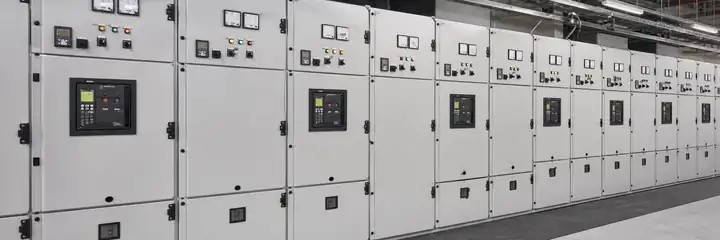

Monitor selected contacts, joints and busbar locations.


Track reviewed stator, winding and bearing temperature points.


Observe multiple defined connection points through independent probes.
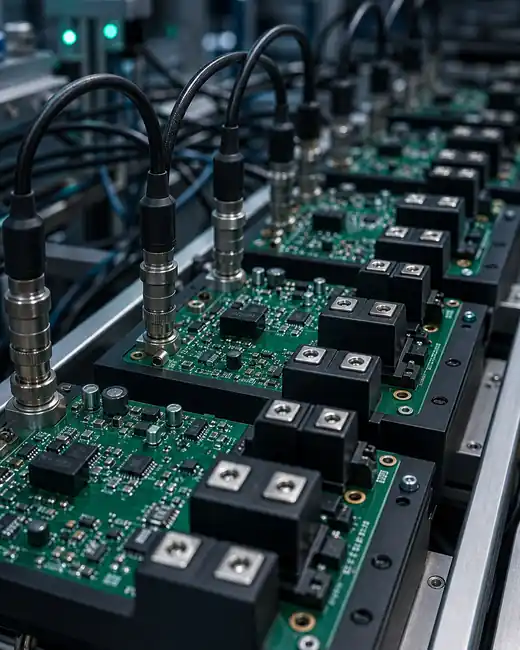

Centralize temperatures from selected thermal-risk locations in cabinets and converters.


Coordinate reviewed temperature points across heating and production equipment.
A configurable system framework for independent point measurement and centralized industrial monitoring.
Passive optical probes provide no conductive measurement path at the sensing point.
Each sensing tip measures one defined location instead of estimating a distributed profile.
Every probe has its own channel, making point identity and diagnostics clear.
Channel count, enclosure size and local-display option can be reviewed for the project.
Coordinate alarms and industrial communication with the selected monitoring workflow.

Review probe placement, routing, channel planning and system outputs before configuration.
Application ReviewPoint selection, probe routing and channel planning Configured DeliveryHost, display and outputs prepared for the reviewed project
Review the locations, probe construction, channel count and monitoring outputs with INNO.
ENGINEERING INPUT
Share the installation context so the system can be reviewed around real point locations rather than generic channel counts.
01Number and location of measurement points
02Expected temperature range
03Probe and fiber length
04Mechanical protection and routing
05Required channel capacity
06Local display requirement
07Alarm and communication outputs
08Enclosure and installation constraints
Sensors, transmitters, monitoring instruments and OEM modules for different temperature sensing and monitoring requirements.
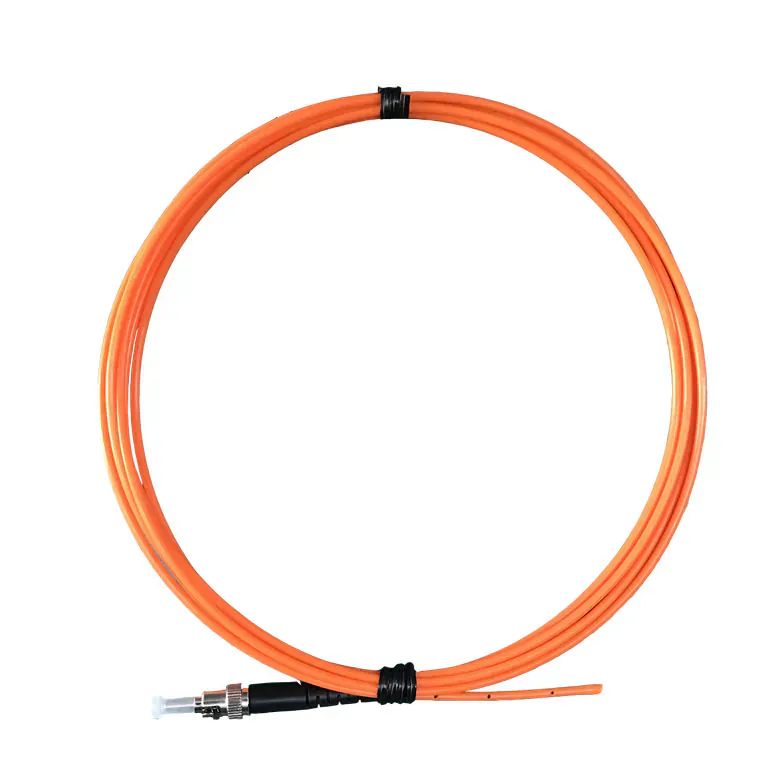
Independent fluorescence point probes for reviewed measurement locations.
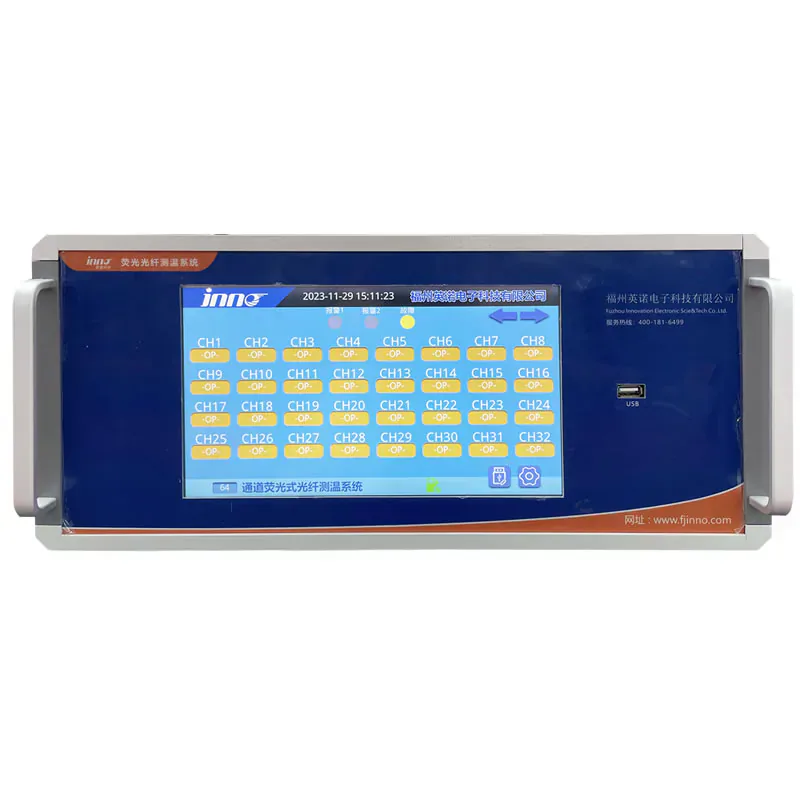
High-channel-count platform for centralized acquisition of independent probes.
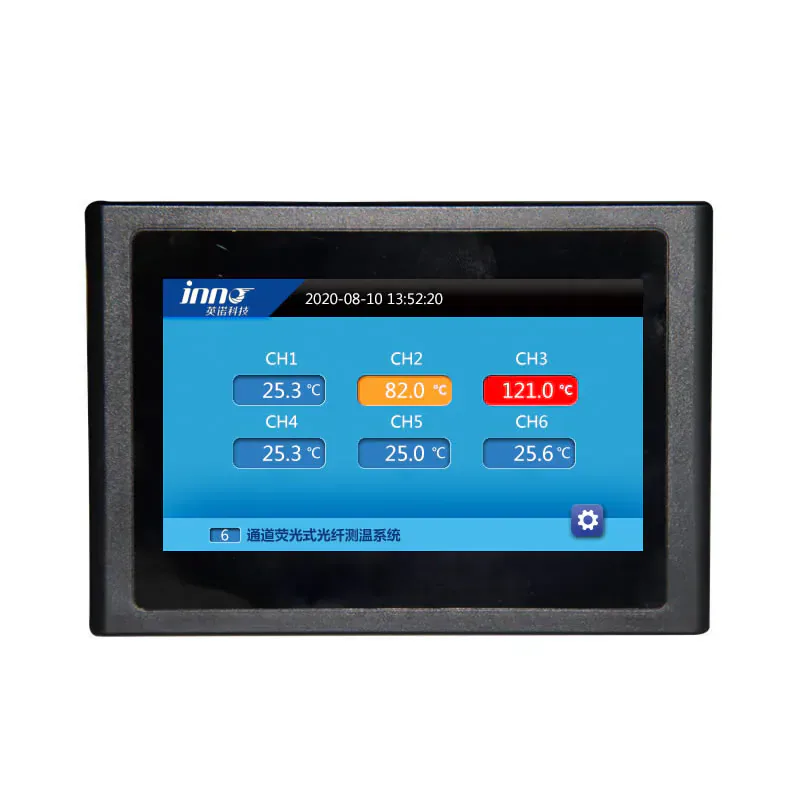
Local temperature display and monitoring interface for configured systems.
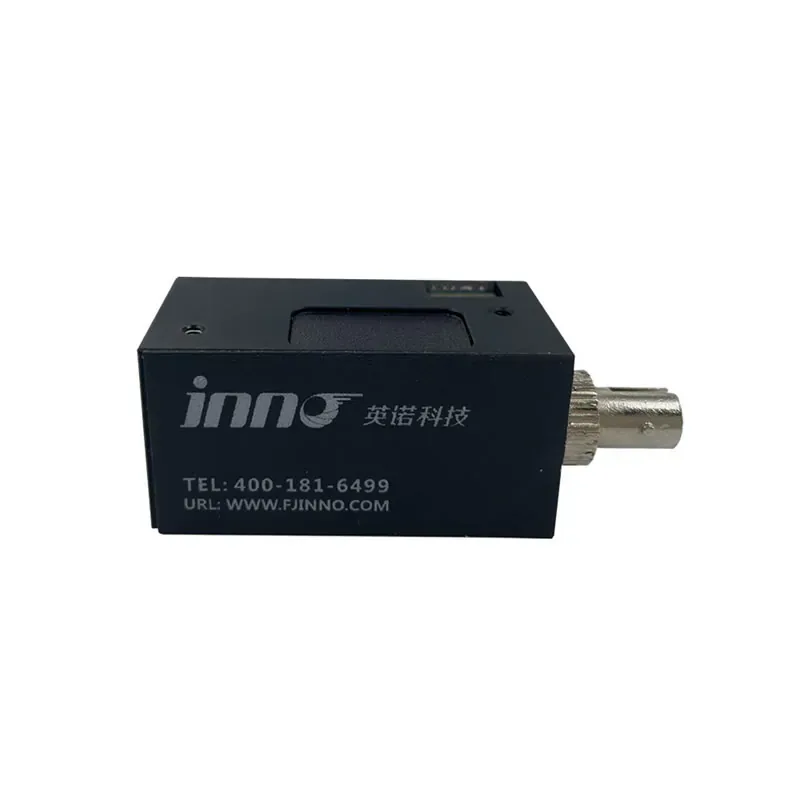
Compact acquisition platform for equipment-level integration.
Application guidance for transformers, switchgear, rotating equipment, high-voltage testing and EMI-intensive industrial systems.
Yes. Independent fluorescence probes can be assigned to reviewed winding hot spots, with one probe and one acquisition channel for each selected temperature point.
Yes. It can monitor selected contacts, joints and busbar locations where electrical isolation and resistance to electromagnetic interference are important.
Yes. Independent probes can be routed to reviewed stator, winding or other critical temperature locations and connected to one centralized monitoring host.
Yes. Passive, non-conductive sensing probes help remove a conductive measurement path from the test point. Probe placement, voltage conditions and routing should be reviewed for the setup.
Yes. The optical sensing path is resistant to electromagnetic and radio-frequency interference, making it suitable for reviewed temperature points in strong-field environments.
Yes. Install one independent probe at each selected zone and connect every probe to its own channel. This provides coordinated point measurements rather than distributed sensing along one fiber.
Yes. A compatible monitoring host can provide reviewed communication and alarm outputs for integration with plant control or supervisory systems.
No. Each channel connects to one fluorescence point probe, and only that probe’s sensing tip measures temperature. A 1–64 channel system therefore supports 1–64 independent point probes.
POINT SELECTION REVIEW